Rare Maps
Rare Atlases
Rare Books
Rare Prints


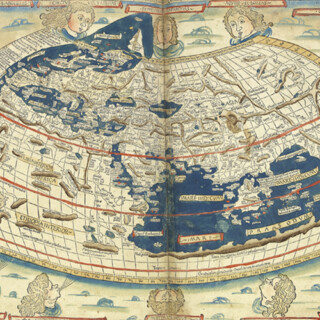
The William B. Ginsberg collection of World Maps; an epitome of the most beautiful, powerful, and influential cartographical images of the 15th and 16th centuries. The earliest printed maps condensed and edited information from three “traditions” of map-making: Christian iconography, classical cartography, and contemporary charts. Ginsberg’s collection encapsulates the subtle metamorphosis of this amalgam of art and science, myth and metaphor, discovery and design, in nineteen maps: from the world map of the ‘Rudimentum novitiorum’ (1475), the earliest printed map, in magnificent original hand-colour; to the largest Italian world map published in the 16th century, Giuseppe Rosaccio’s ‘Universale Descrittione di Tuto il Mondo’ (1657).


Playing cards is, in many ways, a hallmark of civilisation. Like maps and money, a deck of cards is a way of representing an entire value system and an understanding of human nature on paper. A game of cards embodies the inherent unpredictability of life, allowing us to grapple with the uncertainties, directing them towards our own ends. At the card table, when the hands are dealt, all men are temporarily equal; it is how they choose to play those cards that determines who will draw ahead. The players are required to practice both strategic and emotional discipline, and one’s reaction to a bad hand or a sudden windfall can reveal much about his temperament and priorities. As in cards, so in life.

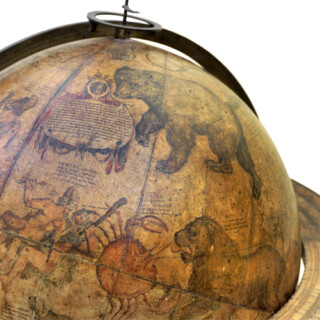
A new catalogue focusing on celestial cartography, a selection of items that show how humans have charted the heavens and marked time by the light of the stars for over 500 years.
![WHISTON, W[illiam] A Scheme of the Solar System with the Orbits of the Planets and Comets](https://i0.wp.com/crouchrarebooks.com/wp-content/uploads/2025/03/20461_1H.jpg?fit=4000%2C4239&ssl=1)
![ADAMS, Dudley [Pair of 10 inch table globes] A Correct Delineation of the Earth by Dudley Adams... [AND] An Improved Celestial Globe by Dudley Adams...](https://i0.wp.com/crouchrarebooks.com/wp-content/uploads/2025/10/20459_1H.jpg?fit=2280%2C3500&ssl=1)
By ADAMS, Dudley, 1810 and 1811.


By POPPLE, Henry; and Clement LEMPRIERE, [c1740]

