Rare Maps
Rare Atlases
Rare Books
Rare Prints
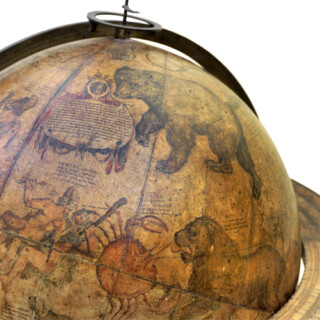


In this catalogue we focus on the early modern world – roughly the fifteenth to seventeenth centuries – when exploration, celestial observation, and mathematical map-making transformed how the globe was measured and imagined. In its pages you’ll find charts and books that trace that shift, from tentative coastlines to confident global projections, showing how paper, ink, and ingenuity turned unknown oceans into navigable space on both the library shelf and in the human mind.

![ARROWSMITH, Aaron To The Hon[oura]ble the Court Directors of the East India Company This Improved Map of India](https://i0.wp.com/crouchrarebooks.com/wp-content/uploads/2026/05/35709_1H.jpg?fit=4000%2C4170&ssl=1)
By ARROWSMITH, Aaron, 2nd January, 1816.

By LAS CASAS, Bartolomé de, 1552-1553.

By STADEN, Johann von, 1557 [dedication, page 14, 1556].

![PALLACHE, Don Samuel [aka Morenu ha-Rav Shemuel PALACHI] An archive of original unpublished documents related to the trial, in London, of Samuel Pallache, on charges of committing "pyracie, spoyle and outrage at sea", in 1614-1615.](https://i0.wp.com/crouchrarebooks.com/wp-content/uploads/2026/03/35651_1H.jpg?fit=4000%2C2765&ssl=1)

Cities, like people, are full of contradictions. They promise order but grow through chaos. They are built on careful plans, yet shaped by imagination and memory. Cities, like dreams, a collaboration between Daniel Crouch Rare Books and Michael Hoppen Gallery for TEFAF Maastricht 2026, explores how cities have been pictured and understood across three centuries - how they have been drawn from above and experienced from within.
The exhibition brings two very different ways of seeing together. Monumental eighteenth‑century town plans - made at a time when faith in reason and measurement was at its height - are shown next to Sohei Nishino’s large‑scale photographic dioramas, dreamlike reconstructions of the same cities created from thousands of individual photographs. These pairings reveal what the city has always been: both a system and an emotion, something that can be mapped and yet never truly contained.

![JONES, W[illiam] A New Portable Orrery [and planetarium attachment].](https://i0.wp.com/crouchrarebooks.com/wp-content/uploads/2026/03/35485_1H.jpg?fit=4000%2C5124&ssl=1)

