全部商品

全部商品


全部商品

全部商品

全部商品

£15

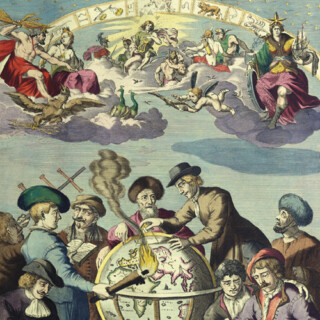
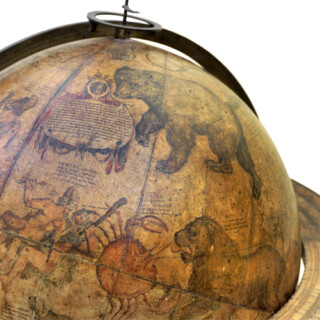
A new catalogue focusing on celestial cartography, a selection of items that show how humans have charted the heavens and marked time by the light of the stars for over 500 years.

£15

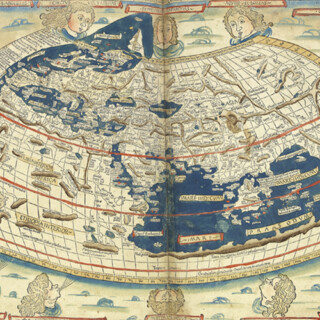
The William B. Ginsberg collection of World Maps; an epitome of the most beautiful, powerful, and influential cartographical images of the 15th and 16th centuries. The earliest printed maps condensed and edited information from three “traditions” of map-making: Christian iconography, classical cartography, and contemporary charts. Ginsberg’s collection encapsulates the subtle metamorphosis of this amalgam of art and science, myth and metaphor, discovery and design, in nineteen maps: from the world map of the ‘Rudimentum novitiorum’ (1475), the earliest printed map, in magnificent original hand-colour; to the largest Italian world map published in the 16th century, Giuseppe Rosaccio’s ‘Universale Descrittione di Tuto il Mondo’ (1657).

£15

A cartographic voyage across time and space.

£45

‘From Sea to Shining Sea’, the Petros G. Pelos Collection of exceptionally rare first-hand printed and manuscript travel accounts, atlases, portfolios, and governmental proclamations. Offered together as a single entity, these 100 items not only reflect the emerging shape of the United States, from the end of the Revolutionary War to the beginning of the Civil War, but were fundamentally instrumental in creating its identity.

£35

Our latest catalogue offers a very select group of the earliest, the most important, and fiendishly rare, maps, atlases, and travel accounts, which are the first printed attempts by European commentators and adventurers, to depict their world, and the emerging outline of the Americas.

£15

“There is nothing in the world of fine books quite like the first discovery of Audubon. The giant energy of the man, and his power of achievement and accomplishment, give to him something of the epical force of a Walt Whitman or a Herman Melville. … Audubon is the greatest of bird painters; he belongs to American history, and as a writer he described things that human eyes will never see again” (Sitwell)

£100

Three thousand years of history, geography, religion, and politics in one thousand maps, plans, and books. There exists a deep-rooted affinity between the history of cartography and the history of the Holy Land. The region served as the subject of the very first survey recorded in writing (Joshua 18:4) and continued to play a prominent role in cartography throughout the following millennia. Please note that shipping is not included. Costs are: £25 to the UK, £35 to Europe, and £45 to the rest of the world.

£20

The Commonwealth of Dominica. The Nature Island. Wai’tu kubuli, which, in the language of the indigenous Kalinago Indians, translates as ‘Tall is her body’. This collection, assembled over two generations, portrays Dominica through one hundred maps, prints, books, manuscripts, and ephemera.

£50

In antiquity, the earliest geographers and cartographers hypothesised a southern landmass to balance out the northern hemisphere, and when, in the second century, Ptolemy asserted that the Indian Ocean was bounded by land to the south, the legend of a terra australis incognita was born.

£50

Maps are scientific instruments. They offer proof of truth. They portray measured relationships between objects and ideas. To achieve this, however, maps must reduce, omit, and distort a three-dimensional world onto a flat piece of paper. This is the paradox of cartography: to tell the truth, a map must lie.

£100

If journalism is, as they say, the first draft of history, then perhaps photography is the raw material of memory; in the sense not just of personal mementoes (though that’s often the way photographs start out), but also of shared recollection. And that sort of collective remembering is, in turn, the stuff of history’s sister, culture, and of identity.

£50

Daniel Crouch Rare Books is proud to present a collection of playingcards and related items that are a store of artistic, political, industrial and cultural history spanning seven centuries and five continents. These palmsized pieces of paper have the power to enrich, educate, advertise or entertain.

The artistic and technical innovations of the generations of card-makers represented here have ensured that, even if you get dealt a bad hand, you are still holding good cards.